
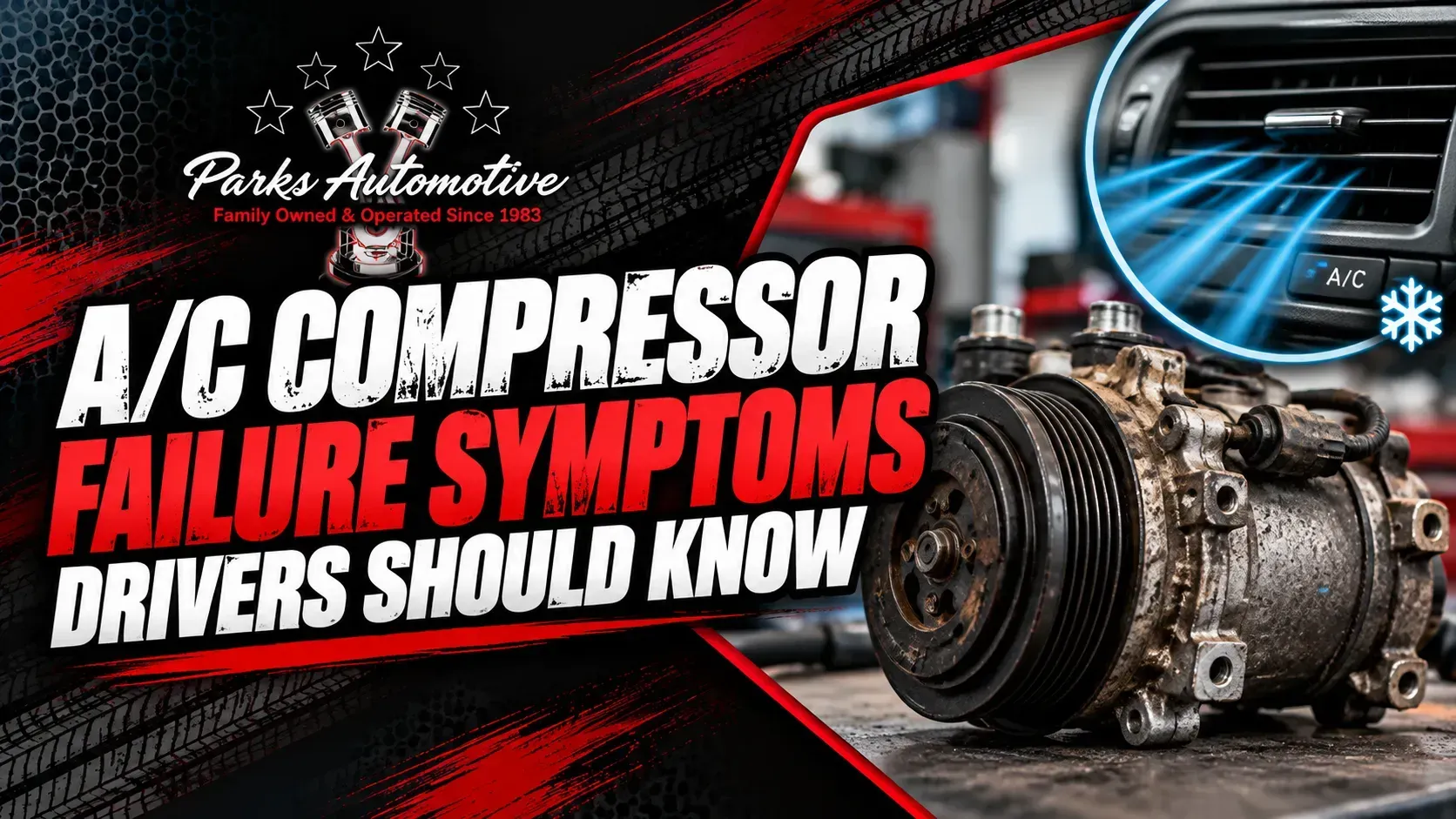
A/C Compressor Failure Symptoms Drivers Should Know
Discover More On:
A/C compressor failure symptoms often begin with warm air, unusual noise, or cooling that comes and goes. Those signs are worth checking, though they do not prove the compressor has failed. At Parks Automotive, we test the complete climate-control system so Cape Girardeau drivers can understand the problem before approving a repair.
What the A/C Compressor Does
The compressor raises refrigerant pressure so heat can be carried out of the cabin and released through the condenser.
How the Compressor Moves Refrigerant
Most compressors are driven by the engine through a belt and pulley, although some newer vehicles use an electric compressor. Our climate and cooling system service covers the connected condenser, evaporator, hoses, controls, and electrical circuits.
Why Low Refrigerant Can Damage the Compressor
Refrigerant carries oil that helps lubricate the compressor. A leak can reduce cooling and lubrication, while repeated refills hide the symptom without fixing the cause. Missouri’s refrigerant servicing guidance explains why refrigerant must be contained and handled correctly.
A/C Compressor Failure Symptoms to Watch
Useful warning signs often appear when the A/C is switched on or cooling demand increases. Note when each symptom starts and whether it changes with engine speed.
Warm Air or Cooling That Fades
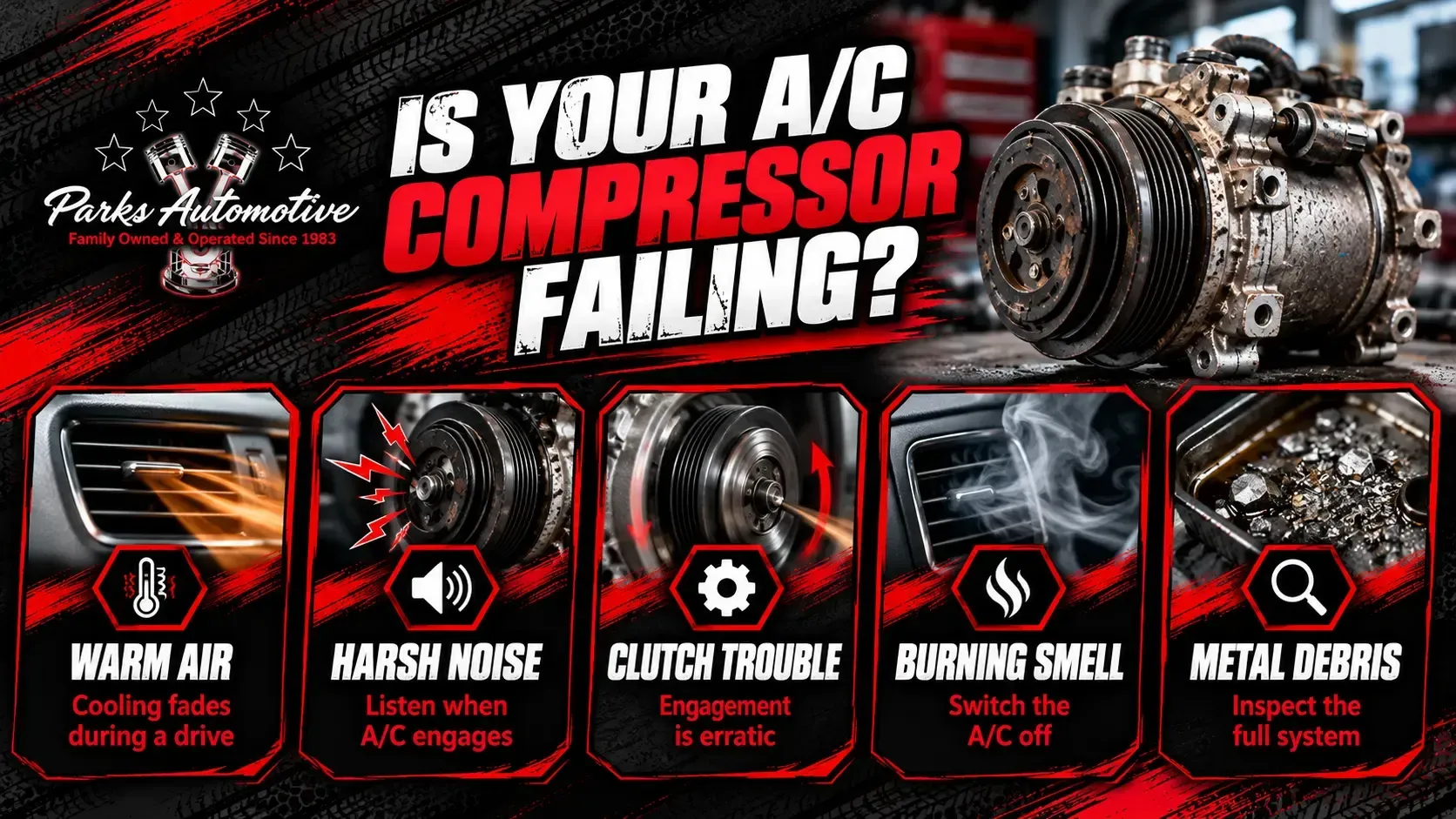
Warm air is one of the most common bad A/C compressor signs, but it can also come from low refrigerant, a blocked expansion valve, or an electrical fault. Cooling that starts normally and fades after several minutes may point to a pressure, airflow, or control problem. Our AC diagnosis and repair process checks the system before parts are recommended.
Grinding, Rattling, or Squealing With the A/C On
Car A/C compressor noise may sound like grinding, rattling, knocking, or squealing from the belt area. A sound that begins only when the A/C engages can involve the compressor, clutch, pulley bearing, or belt tensioner. Harsh grinding needs prompt attention because an internally damaged compressor may spread metal debris through the refrigerant circuit.
A Clutch That Will Not Engage or Cycles Repeatedly
On clutch-equipped systems, the compressor clutch may fail to engage or cycle more often than usual. Low refrigerant pressure, a relay, wiring, a sensor, or the control module can cause similar behavior. Pressure readings and electrical tests help separate these possibilities.
Burning Smells or a Seized Pulley
A seized compressor or pulley can make the drive belt slip and create a hot-rubber smell. Because some vehicles use one belt for the A/C compressor and other engine accessories, a locked component can affect more than cabin comfort. Turn off the A/C if the smell starts with belt noise; stop safely if you see smoke or another warning.
Similar Problems That Can Mimic Compressor Failure
Several faults can produce the same weak-cooling complaint as a damaged compressor. Full-system testing helps identify the actual cause.
Refrigerant Leaks and Electrical Faults
A leaking hose, condenser, service port, or evaporator can lower system pressure until the compressor is prevented from running. Blown fuses, failed relays, damaged wiring, and sensor faults can also interrupt compressor operation. The correct refrigerant charge and electrical command should be verified before failure is diagnosed.
Condenser, Expansion Valve, and Blend Door Problems
A restricted condenser or expansion valve can disturb pressure and reduce cooling. Inside the dash, a stuck blend door may mix heated air with cooled air even when the refrigerant circuit is working.
We apply the same system-level approach across the auto repair services we provide for domestic, Asian, and many European vehicles. Our Toyota repair and maintenance work also includes climate-control concerns such as compressor-clutch and evaporator faults.
What to Do When Compressor Trouble Starts
Mild cooling loss calls for timely testing, while grinding, smoke, or a burning smell calls for immediate caution.
Turn Off the A/C if You Hear Harsh Mechanical Noise
Switch the A/C off if a strong grinding or squealing sound begins when the system engages, which may reduce load on the damaged part. Do not open refrigerant fittings or use a refill product as a substitute for diagnosis. If a belt is smoking, a warning light comes on, or steering effort suddenly changes, pull over in a safe place and arrange assistance.
Schedule Measured A/C Diagnostics
A proper inspection may include vent-temperature checks, high- and low-side pressure readings, leak detection, compressor-command tests, and inspection of the belt, clutch, and pulley. If internal damage is found, related parts may need inspection or flushing to keep debris from harming a replacement compressor. The Parks Automotive team can explain the test results and repair scope before work begins.
Takeaways
Warm air, fading cooling, clutch trouble, and strange noises can all point to a failing compressor, though each one has other possible causes. If you hear grinding, see smoke, or smell a burning belt, switch the A/C off until the vehicle is checked. Low refrigerant also reduces compressor lubrication, which is why a leak should be found rather than topped off again and again.
Pressure readings, electrical tests, and a full-system inspection show whether the compressor is really to blame. Catching the problem early may also spare the condenser, expansion device, drier, and refrigerant lines from added damage.
Frequently Asked Questions
Can I drive with a failing A/C compressor?
Usually yes, as long as weak cooling is the only symptom and there is no belt noise, burning smell, smoke, or warning light. Because some compressors share a drive belt with other accessories, stop using the A/C and arrange an inspection if mechanical symptoms appear.
Does warm air always mean the compressor is bad?
No, warm air does not always mean the compressor is bad. Low refrigerant, a leak, an electrical fault, a restricted valve, poor condenser airflow, or a blend-door problem can create the same complaint.
What does a bad A/C compressor sound like?
A bad compressor may grind, rattle, knock, or squeal when the A/C is turned on. Similar sounds can come from the clutch, pulley bearing, belt, or tensioner, so the noise source should be confirmed before repair.
Can low refrigerant damage the A/C compressor?
Yes, low refrigerant can contribute to compressor wear because refrigerant helps carry lubricating oil through the system. A low charge also indicates that refrigerant has escaped, so leak testing should be part of the diagnosis.
What happens during A/C compressor replacement?
A/C compressor replacement usually includes recovering the refrigerant, removing the failed unit, inspecting the system for contamination, and installing the required related parts. The system is then evacuated, charged with the specified refrigerant amount, leak-tested, and checked for cooling performance.
Schedule A/C Compressor Diagnosis With Parks Automotive
If you notice A/C compressor failure symptoms during a Cape Girardeau commute, schedule testing before harsh noise or debris creates a larger repair. For A/C compressor replacement in Cape Girardeau, MO, call (573) 335-2599 or visit 17 S Park Ave, Cape Girardeau, MO 63703. We will inspect the system, explain what we find, and review the repair options with you.

Bryant Parks
Bryant Parks is the owner of Parks Automotive LLC, a family-owned auto repair shop in Cape Girardeau, Missouri. He has worked full-time in the automotive trade since he was 16 and received his training at Nashville Auto Diesel College. In 2012, he took ownership of the shop his father, Joe Parks, founded in 1983.
Bryant and his daughter, Jessica Parks, lead a team that handles brake repair, engine diagnostics and repair, and suspension and steering repair. The shop services domestic, Asian, and European vehicles, including Ford, Chevrolet, Toyota, and Honda.
He traces drivability and electrical faults using a Snap-on Triton lab scope and a TOPDON Phoenix Max. These tools allow him to test sensors and circuits directly before recommending any part replacement.
More than four decades after his father opened the shop, Bryant continues to run it with the same approach. He explains what each vehicle needs in plain terms and treats every customer like family.
