Expert Engine Diagnostics for Cape Girardeau Drivers
Modern engines run on layered sensor networks, and a warning light is rarely the actual problem. Parks Automotive isolates the actual fault before parts are ordered, using full OBD-II scans, live CAN bus data, and freeze-frame review rather than a parts-swap approach.
Our engine diagnostic scope includes check engine light diagnostics, engine repair, engine oil leak repair, and fuel system repair and cleaning across domestic, Asian, and European vehicles. Every scan includes a written estimate before any repair begins. We also consider how Missouri’s temperature swings and Cape Girardeau County’s varied driving conditions can affect engine components.
Parks Automotive | 17 S Park Ave, Cape Girardeau, MO 63703 | (573) 335-2599
Engine Diagnostics Services
Engine diagnostics is a system-level investigation, not a code read. A stored DTC identifies the circuit or system that reported the fault. However, the root cause may involve a sensor, damaged wiring, an upstream mechanical failure, or a related system pushing the engine outside its expected range. Every service below starts with a stored code scan, live data review, and freeze-frame analysis before any component is called into question.
Check Engine Light Diagnostics
A stored code identifies the affected circuit, but it does not always reveal the root cause. For example, a P0171 lean condition may result from a vacuum leak, a failing MAF sensor, a fuel pressure issue, or an upstream exhaust leak before the oxygen sensor. We confirm the actual fault through live data review before quoting parts. See check engine light diagnostics for the full diagnostic scope and process.
Engine Repair
Internal engine faults such as timing chain guide wear, valve cover leaks, or low compression on one cylinder require a documented diagnosis before teardown. We use compression testing, leak-down testing, and stored data review to confirm the extent of the repair. See engine repair for the full repair scope.
Engine Oil Leak Repair
Oil leaking from a valve cover gasket, rear main seal, or timing cover may create a burning smell during a Missouri heat wave. It may also leave spots on the driveway after a cold start. See engine oil leak repair for how we trace the source before recommending repair.
Fuel System Repair and Cleaning
Fuel injector fouling, a failing fuel pressure regulator, or carbon buildup on the intake valves can affect engine performance. Common signs include a rough idle, hesitation under load, or a lean-condition code that returns after being cleared. Direct-injection engines are common in newer domestic trucks and Asian sedans around Cape Girardeau.
Carbon buildup on the intake valves is a mechanical issue that fuel injector cleaner added to the tank cannot fix. The stop-and-go pattern along Kingshighway and William Street contributes to shorter warm-up cycles that accelerate deposit formation. We diagnose fuel system faults with fuel pressure testing, injector balance testing, and live fuel trim analysis. These tests help distinguish a fuel delivery problem from a related sensor issue.
The recommended repair depends on what testing reveals. It may involve injector service, fuel pressure regulator replacement, intake valve walnut blasting on direct-injection engines, or fuel pump replacement followed by a fuel trim reset.
Drivability Diagnostics
Problems such as stumbling during acceleration, surging at idle, or hesitation during warm-up may not trigger a stored code. This can make them more difficult to diagnose than a straightforward check engine light concern. The cause is often an intermittent signal loss from the MAF sensor or throttle position sensor. In other cases, fuel trim compensation appears only when the engine is under actual driving load. Missouri temperature swings between morning cold starts and mid-day heat can trigger sensor drift that never shows up on a static bay scan.
We monitor live data during a road test that reflects your normal driving conditions. This helps us catch intermittent problems that may not appear during an idle scan in the shop. Depending on the system involved, the repair may include sensor replacement, wiring or connector repair, or an ECU relearn. Wiring repairs are recommended when test traces show signal loss indicative of a harness fault.
Ignition System Repair
Misfires caused by failing coil packs, worn spark plugs, or damaged plug wires may trigger cylinder-specific codes from P0301 through P0308. Common symptoms include rough engine operation and occasional hard starting. Most current vehicles use coil-on-plug ignition systems. A single failing coil may trigger a random misfire code that shifts between cylinders when the coils are moved during testing.
Extended idling in downtown Cape Girardeau traffic and short winter trips that never allow the engine to reach full operating temperature can accelerate spark plug fouling. This is especially common on older ignition systems.
We confirm the failing component by swapping coils across cylinders, monitoring live misfire counts, and inspecting plug condition before replacement. The repair typically involves coil replacement, a full plug set on high-mileage engines, and a fuel trim review to confirm the misfire cleared cleanly.
Engine Sensor Diagnostics
MAF sensors, oxygen sensors, throttle position sensors, and coolant temperature sensors all feed the ECU data that controls fuel delivery, ignition timing, and emissions compensation. A drifting sensor may not fail completely. Instead, it can report a value that appears to be within range but is incorrect for the operating condition. This may cause poor performance without triggering a hard fault code. Freeze-thaw cycles across Missouri winters expose connector corrosion at sensor pigtails, which is often the actual fault behind an intermittent sensor code.
We test sensor output against live engine data and compare against factory specification rather than swapping parts on a code alone. The repair may be a sensor replacement, a connector repair, or an ECU relearn depending on what the live data actually shows.
Oxygen Sensor Replacement
Failing upstream or downstream oxygen sensors may trigger P0130-series, P0420, or P0430 codes. They can also cause rich or lean fuel trims and reduce fuel economy before noticeable drivability problems appear. A downstream oxygen sensor code paired with a P0420 catalyst efficiency code requires careful diagnosis. A failing catalytic converter and a slow downstream sensor can produce nearly identical stored data.
We verify sensor performance through switch-rate analysis on live data before condemning either the sensor or the converter. On vehicles that see frequent short trips around Cape Girardeau, sensor heater circuits fail earlier than average because they cycle more often. The repair is straightforward sensor replacement with a fuel trim monitor review to confirm the fault cleared.
Fuel Injection Cleaning
Clogged or partially blocked injectors show up as a rough idle, uneven fuel trims cylinder-to-cylinder, and occasionally a lean-condition code that clears and returns. Injector balance testing identifies which specific injector is underperforming before service.
We perform in-place chemical service on port-injection engines and remove-and-service on direct-injection systems where in-tank additives cannot reach the intake valves. Follow-up fuel trim monitoring confirms the injector rate returned to specification.
Engine Replacement
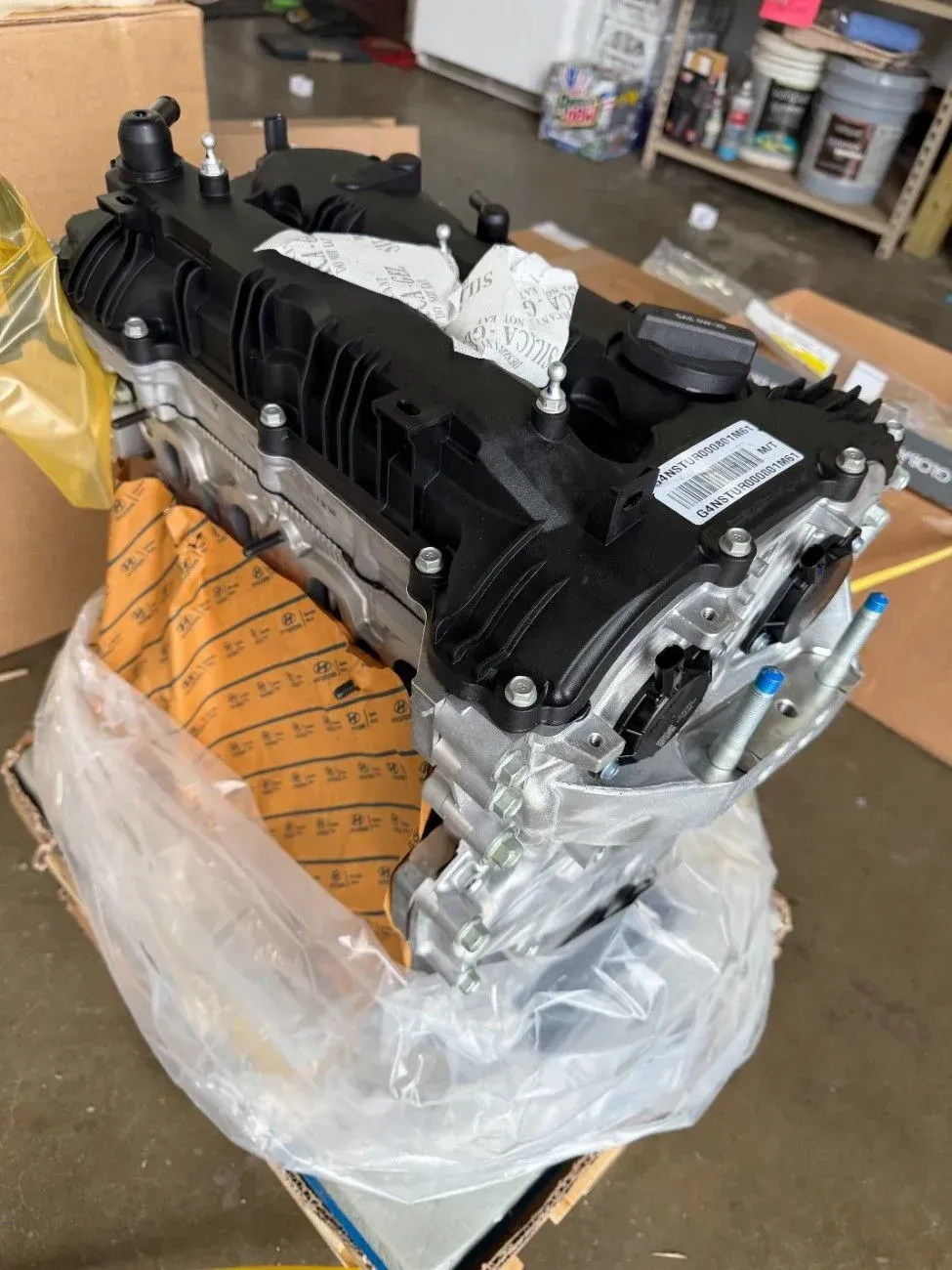
Complete engine replacement is the recommended path when internal damage exceeds the cost of individual repair, such as a spun bearing, a cracked block from a severe overheat, or timing failure that caused valve-to-piston contact. We document the failure with compression testing, oil sample inspection, and stored fault review before quoting a replacement.
Replacement options include remanufactured long blocks, used verified-mileage engines, and new OEM assemblies depending on the vehicle and budget. Every replacement includes an ancillary component review since a failed engine often takes a sensor, harness section, or cooling component with it.
What Cape Girardeau Drivers Ask Us About Engine Problems
Symptoms and stored codes rarely tell the full story on their own. The paragraphs below cover the most common complaints we see and how the underlying cause is confirmed before any part is ordered.
Check Engine Light On After Refueling
A check engine light immediately after fueling is most often a loose or damaged gas cap triggering an EVAP system fault, typically a P0442 or P0455 code. The EVAP system pressure-tests the fuel tank and vent lines, and any leak in that seal will store a code.
If tightening the cap does not clear the light after two or three drive cycles, we smoke-test the EVAP system to find the actual leak point.
Rough Idle or Stalling
A rough idle may result from a vacuum leak, a dirty throttle body, or a failing idle air control circuit on older vehicles. It may also indicate a misfire that is too subtle to trigger a hard fault code. Live fuel trim data at idle and short-term versus long-term trim comparison isolates the source before parts are ordered.
Engine Misfire Under Load
Misfires that appear only during acceleration may point to ignition components struggling under higher cylinder pressure. They can also indicate a fuel delivery problem under load or low compression in the affected cylinder. Live misfire counters during a road test identify which cylinder and which condition triggers the fault.
Oil Spots or Burning Oil Smell
Oil spots after a cold start or a burning smell during a Missouri summer heat wave may indicate an oil leak. Common sources include the valve cover gasket, timing cover, or oil pan seal. UV dye tracing confirms the source before any gasket is replaced.
Poor Fuel Economy Without a Warning Light
A noticeable drop in fuel economy without a stored code may indicate a drifting oxygen sensor. Other possible causes include a partially clogged fuel injector or a MAF sensor that is reading slightly low. Fuel trim data over a road test identifies the compensating system before any component is replaced.
Can't Tell What's Wrong?
Get Started Today
Mon - Fri | 8 AM - 5 PM
Sat - Sun | Closed
How Parks Automotive Handles Engine Diagnostics
Every diagnostic starts with a documented intake: when the symptom occurs, at what temperature, at what speed, and whether it happens after refueling, during warm-up, or under load. That information guides the initial scan rather than a blind code read.
The vehicle is then connected to a professional-grade OBD-II scanner with full-system coverage for stored codes, pending codes, freeze-frame data, and live CAN bus data. Live data is captured at idle and during a road test on routes that reproduce the customer's actual complaint, not just an idle-in-the-bay scan. Sensor values, fuel trims, and misfire counters are compared against factory specification before any component is called into question.
When scan results and live data identify a suspected component, we confirm the cause with physical testing. For vacuum and EVAP concerns, we may perform a smoke test. Compression and leak-down testing help uncover internal engine faults, while fuel pressure testing checks for delivery problems. We also inspect connectors and wiring harnesses to verify signal integrity. The point of this step is to confirm the fault with measured evidence before parts are ordered.
Findings are documented in a written estimate with the specific fault, the repair path, and the cost before any work begins. Nothing is approved without your explicit sign-off.
RAM owners from Jackson, Scott City, Gordonville, and throughout Cape Girardeau County bring their trucks to Park Ave. They value an honest diagnostic process and turnaround times that respect their work schedules. Farm trucks traveling Route K, contractors moving between job sites near I-55, and daily commuters on Broadway all place heavy demands on their RAMs. These driving conditions can reveal developing weak points sooner.
Our shop location at 17 S Park Ave sits close to downtown and the Mississippi River corridor, making drop-off convenient from any direction.
What Sets Parks Automotive Apart for Engine Diagnostics
Replacing parts based on a fault code often leads to repeat visits because the underlying problem was never confirmed. Our diagnostic process focuses on testing, verification, and clear documentation to identify the root cause before any repairs begin.
- Snap-on TRITON diagnostic platform with full-system coverage across domestic, Asian, and European vehicles
- Dealer-level diagnostic tools with manufacturer coverage for domestic, Asian, and European vehicles
- OEM and OEM-equivalent parts are used as the standard for every engine repair
- Family-owned and operated in Cape Girardeau since 1983, now in its second generation of ownership
- Early drop-off and after-hours pickup options to make scheduling more convenient
- A loyalty rewards program for returning customers
TAGLINE
Our Promise to You
- A written estimate before any diagnostic work or repair begins, with the fault and recommended solution explained in plain language
- Recommendations supported by measured evidence, such as a stored code, live data reading, or physical test result
- A clear explanation of the diagnosis and available repair options before you approve the work, including alternatives when applicable
- Detailed service records are kept on file for future reference and warranty support
- Personalized follow-up after every repair because our name is on the building
For related engine and drivetrain services, see our transmission repair and service page.
FAQs About Engine Diagnostics in Cape Girardeau
How much does engine diagnostics cost in Cape Girardeau?
Engine diagnostic pricing at Parks Automotive varies based on the level of testing required. Services may range from a basic OBD-II code read to a full multi-system diagnostic with live data capture, a road test, and physical fault confirmation. Every diagnostic includes a written estimate before repair work begins, and we discuss the scope and cost with you before any billable time is invested. Call (573) 335-2599 for a current estimate based on your vehicle and symptom.
What is the difference between a code read and a full diagnostic?
A code read pulls stored fault codes from the ECU and tells you which circuit reported a problem. A full diagnostic uses those codes as a starting point, then captures live data, freeze-frame conditions, and physical test results to confirm the actual cause.
A code read tells you where to look. A diagnostic tells you what to fix.
Why is my check engine light on after refueling?
A check engine light that appears soon after fueling often points to an EVAP system fault. Common causes include a loose or damaged gas cap, which may trigger a P0442 or P0455 code. Tighten the cap and normally drive for two or three cycles. If the light stays on, the EVAP system may have a leak elsewhere, and a smoke test will identify the actual leak point.
Can independent shops diagnose vehicles as well as the dealer?
Yes, when the shop has professional-grade scan tools with full-system coverage. Parks Automotive runs full-system diagnostics, guided testing, and bi-directional controls across domestic, Asian, and European vehicles. The primary difference is often diagnostic cost and scheduling flexibility rather than diagnostic capability.
How long does a full engine diagnostic scan take?
Most engine diagnostics take between one and two hours of bay time, depending on the complaint and how fast the fault can be reproduced. Intermittent faults that only appear under specific driving conditions may require an extended road test to capture live data while the anomaly is happening. We provide a time estimate before starting so you can plan drop-off around your schedule.
Ready for Expert Engine Diagnostics Repair?
A check engine light, a rough idle, or a fuel economy drop is telling you something specific about a system that has fallen out of specification. A measured diagnosis identifies the actual cause before any part is ordered, which is the difference between a repair that holds and one that returns.
Qualifying engine repairs are backed by our warranty. Call to schedule or use the button below.
Parks Automotive | 17 S Park Ave, Cape Girardeau, MO 63703 | (573) 335-2599
