
Complete Brake Repair Services in Cape Girardeau
A soft brake pedal, metallic squeal at low speed, or steering wheel vibration while braking can all signal wear. These symptoms may reflect the condition of the friction material and rotor surfaces, especially when braking down the William Street hill.
Parks Automotive services complete brake systems on domestic, Asian, and European vehicles. Our brake services include pad replacement, rotor replacement, caliper service, brake fluid flushes, ABS module diagnostics, and Missouri State Inspections. A brake mechanic road tests the vehicle, measures pad thickness and rotor runout, and writes the estimate before any parts are ordered.
Whether you are commuting daily on major roads or running errands down main routes, your vehicle needs reliable performance for stop-and-go traffic and Missouri weather. Located at 17 S Park Ave in Cape Girardeau, Parks Automotive helps keep your vehicle road-ready, backed by 43 years of hands-on brake service in Cape Girardeau County.
Parks Automotive | 17 S Park Ave, Cape Girardeau, MO 63703 | (573) 335-2599
Brake Repair Services
The brake system is a hydraulic, mechanical, and electronic loop. Pad friction, rotor mass, fluid moisture content, caliper piston movement, wheel speed sensor input, and ABS module logic all interact every time you press the pedal.
When one piece drifts out of spec, the others compensate until they cannot. A proper diagnosis measures each element before recommending parts, which is how repairs come back to spec rather than just quiet for a few weeks.
Brake Pad Replacement
Squealing at low speed, longer stopping distances, and a dashboard brake wear sensor light usually trace back to pads at or below 3mm. We measure remaining friction material, inspect the caliper piston and slide pins, and match either OEM brake pads or quality ceramic brake pads to the platform. Check our brake pad replacement page for full service scope and pad selection details.
Brake Rotor Replacement
Pedal pulsation under braking, a visible ridge at the rotor edge, or measurable disc thickness variation points to rotors that need replacement rather than resurfacing. Cape Girardeau's stop-and-go traffic along Kingshighway and Broadway heats rotors repeatedly, and repeated thermal cycling combined with road moisture accelerates disc thickness variation. Every brake pad and rotor replacement includes an inspection of the caliper slides and a refresh of the brake hardware. We also perform a post-repair road test to confirm even pad transfer across the new rotor surface.
We use OEM brake rotor specifications when matching parts so the friction pair behaves the way the engineers designed it to. Ignored rotor pulsation eventually cracks the friction ring and can distort the caliper bracket, turning a routine disc brake service into a much larger repair.
Missouri State Inspections
Missouri State Inspections require a licensed station and a documented review of brakes, steering, suspension, tires, lights, exhaust, and horn against state pass/fail criteria. Parks Automotive is a licensed inspection station, and the inspection is performed by a certified inspector on-site rather than routed to a third party. Visit the Missouri state inspections page for what to bring and how to prepare your vehicle.
Pre-Purchase Vehicle Inspections
Before purchasing a used vehicle, an independent mechanical inspection can reveal problems a dealer walkaround may miss. These may include deferred maintenance, signs of previous collision damage, and hidden brake or suspension wear. See our pre-purchase vehicle inspections page for the full inspection checklist.
ABS Module Repair
An ABS warning light, intermittent wheel lockup, or loss of stability control usually starts with a wheel speed sensor signal dropout or a fault stored in the ABS module itself. On higher-mileage vehicles, the likely cause is a corroded sensor connector or moisture inside the module. Missouri’s freeze-thaw cycles and winter road salt can accelerate this type of failure around the wheel wells and undercarriage. A brake mechanic scans for stored codes, reviews live wheel speed data during a road test, and inspects the harness and connectors before condemning the ABS module.
The repair depends on the fault we confirm. A wiring issue may require harness or connector repair, while an intermittent wheel signal may call for sensor replacement. If testing confirms an internal module failure, the module may need replacement and reprogramming. Ignoring an ABS warning disables anti-lock and stability control functions. This changes how the vehicle behaves at the exact wet-pavement panic stop where you need those systems most.
Brake Caliper Repair
A caliper that sticks, drags, or leaks fluid shows up as uneven pad wear on one wheel, a pull under braking, or a hot wheel after a short drive. The underlying cause is usually a corroded brake caliper piston, seized slide pins, or a torn piston seal that lets moisture past the boot. Winter road salt on Cape Girardeau streets and county roads can quickly reach caliper slide pin sleeves and piston bores. This helps explain why caliper drag is common on local vehicles more than five or six years old.
Winter road salt on Cape Girardeau streets and county roads can reach caliper slide pin sleeves and piston bores faster than it would in drier climates. As a result, caliper drag is common on local vehicles more than five or six years old.
The repair depends on the condition of the caliper bore. If the bore is clean, the caliper may be rebuilt with new seals and hardware. If the bore is pitted, the caliper must be replaced, followed by fresh DOT 4 brake fluid and a complete system bleed.
Brake Fluid Flush
Brake fluid absorbs moisture from the air over time. Once the water content reaches roughly three percent, the fluid’s boiling point drops and internal corrosion can begin. This may affect the ABS module, caliper pistons, and brake lines.
Symptoms are subtle at first, including a slightly longer pedal after repeated hard stops or a dark amber fluid color in the reservoir. Missouri humidity can accelerate moisture absorption in vented brake fluid reservoirs. Vehicles parked outdoors year-round in Cape Girardeau County may need fluid service closer to the shorter end of the manufacturer’s recommended interval.
We test the brake fluid’s moisture level with a refractometer before beginning the flush. We then remove the old fluid from each caliper and refill the system with the correct DOT 4 specification for the vehicle. Skipping fluid service is the single most common cause of premature ABS module failure, and an ABS module replacement costs many times what a flush does.
Parking Brake Repair
A parking brake that will not hold on an incline may have a different cause than one that will not release. An electronic parking brake (EPB) warning light can also point to a separate fault, depending on the system. Cable-operated parking brakes may stretch, seize inside the sheath, or corrode around the shoe hardware. Electronic parking brake faults usually involve the motor, actuator, or control module. In those cases, a scan tool is needed to retract the caliper piston before rear brake service can begin.
Missouri winters leave enough road salt on undercarriage components that cable seizure is a routine finding here, particularly on trucks and SUVs that see county road duty. We inspect cable condition and shoe hardware on mechanical systems, and scan the EPB module for stored faults on electronic systems before recommending parts. The repair is either cable and hardware replacement, EPB motor replacement, or module reprogramming, depending on what the diagnosis actually shows.
Brake Line Repair
A brake line that weeps or fails outright shows up as a spongy pedal, a puddle under the vehicle, or a hard pedal that drops to the floor in the worst case. Corrosion is the most common cause on vehicles that have been through several Missouri winters. The damage often begins at a bend or fitting where road salt tends to collect. A visual inspection of the full line routing from the master cylinder to each caliper identifies weeping fittings and pitted line sections before catastrophic failure.
We replace corroded sections with the correct line diameter and flare fitting, then bleed the system and pressure-test before releasing the vehicle. Driving on a compromised brake line is not something to defer since a hard pedal loss can happen without warning.
Engine Replacement
A downstream oxygen sensor code and a P0420 catalyst efficiency code can produce similar diagnostic data. Careful testing is needed to determine whether the catalytic converter or the downstream sensor is failing. We document the failure with compression testing, oil sample inspection, and stored fault review before quoting a replacement.
Replacement options include remanufactured long blocks, used verified-mileage engines, and new OEM assemblies depending on the vehicle and budget. Every replacement includes an ancillary component review since a failed engine often takes a sensor, harness section, or cooling component with it.
Brake Repair Symptoms That Need Attention
Brake symptoms point to different components depending on when they occur, how they feel, and what the vehicle was doing at the time. We identify the source before recommending parts.
Squealing or Grinding Noise
A high-pitched squeal at low speed is usually the brake wear sensor tab contacting the rotor, telling you the pads are near end-of-life. A deeper metallic grinding means the pad backing plate is on the rotor and disc thickness is being lost with every stop. See our brake pad replacement page for the repair path.
Pedal Pulsation Under Braking
A pulsing brake pedal or steering wheel vibration during braking often points to rotor disc thickness variation. Repeated heat cycles from stop-and-go traffic along Kingshighway can accelerate this type of wear. Rotor measurement with a micrometer confirms whether the disc can be resurfaced or needs replacement.
Soft or Sinking Pedal
A soft brake pedal may point to several problems. The pedal may sink slowly under steady pressure or require two pumps to firm up. Possible causes include air or moisture in the fluid, a failing master cylinder, or an internal caliper seal leak. A pressure test and fluid moisture check identify which one before parts are ordered.
ABS or Brake Warning Light
An ABS light indicates a fault the module has stored, most often a wheel speed sensor signal dropout after Missouri winters have worked salt into the connector. A red brake warning light may indicate low brake fluid or a parking brake fault and should be inspected as soon as possible.
Pulling to One Side When Braking
A pull under braking usually means a sticking caliper on the opposite side, uneven pad wear, or a collapsed flexible brake hose restricting fluid return. An infrared temperature check across both front wheels after a short road test identifies the dragging side.
Can't Tell What's Wrong?
Get Started Today
Mon - Fri | 8 AM - 5 PM
Sat - Sun | Closed
How Parks Automotive Handles Brake Repair
Every brake job starts with a documented road test so the technician feels what you feel. We note pedal firmness, the speed at which noise begins, any pulling, and whether pulsation is present. We also record the road conditions where each symptom appears. A problem that occurs at 45 mph on Route K may behave differently from one that appears in a parking lot at 5 mph.
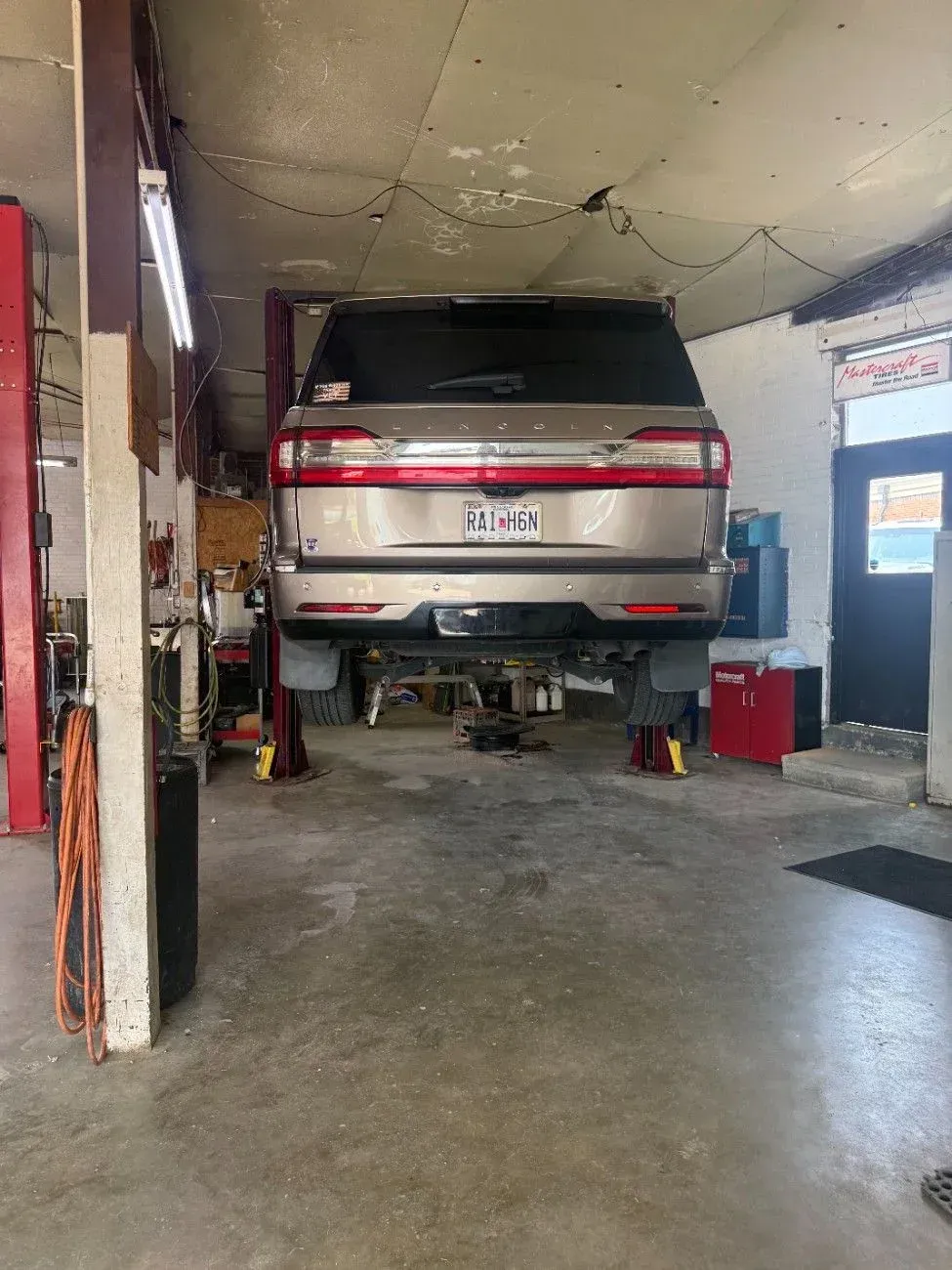
The vehicle then comes off the road and onto the lift for measurement. We measure brake pad thickness against the manufacturer’s minimum specification. Rotors are checked for disc thickness variation and runout using a micrometer and dial indicator. We also test the brake fluid for moisture and inspect the calipers for proper piston movement and slide pin condition.
On vehicles with an electronic parking brake, the caliper is retracted through the scan tool rather than forced back mechanically. On vehicles with an ABS fault, stored codes and live wheel speed data are reviewed before any sensor is condemned.
Findings are documented in a written estimate with the measured evidence attached: pad thickness in millimeters, rotor measurements, and fluid moisture reading. No work begins without your approval of the scope and cost. When a recommendation appears on the estimate, we can show you the measurement that supports it.
For the full diagnostic and repair details, see the brake pad replacement, Missouri state inspections, and pre-purchase vehicle inspections entries above.
RAM owners from Jackson, Scott City, Gordonville, and throughout Cape Girardeau County bring their trucks to Park Ave. They value an honest diagnostic process and turnaround times that respect their work schedules. Farm trucks traveling Route K, contractors moving between job sites near I-55, and daily commuters on Broadway all place heavy demands on their RAMs. These driving conditions can reveal developing weak points sooner.
Our shop location at 17 S Park Ave sits close to downtown and the Mississippi River corridor, making drop-off convenient from any direction.
The Parks Automotive Standard for Brake Repair
Brake repairs should be based on measurements, not assumptions. Our process is designed to identify issues such as caliper drag, rotor runout, and excess moisture in the brake fluid before they lead to repeat problems.
- OEM or quality ceramic brake pads selected for the specific vehicle platform rather than a one-size-fits-all option
- Rotor measurements taken with a micrometer and dial indicator during every brake service
- Brake fluid moisture testing completed before any flush is recommended
- A licensed Missouri State Inspection station with certified inspectors on-site
- Family-owned and serving Cape Girardeau County since 1983, with 43 years of local experience
- Early drop-off and after-hours pickup options for easier scheduling
- Loyalty rewards available for returning customers
TAGLINE
Our Promise to You
- A written estimate before work starts, including brake pad and rotor measurements
- Recommendations supported by measurements and inspection results that we can show you at the counter
- A clear explanation of which repairs need immediate attention and which can safely wait.
- Documented service records kept on file for every visit
- Personalized service from the same family-owned shop that has been repairing brakes in Cape Girardeau since 1983
For related work, visit our wheel alignment and shocks and struts replacement pages.
FAQs About Brake Repair in Cape Girardeau
How much does brake repair cost in Cape Girardeau?
Brake repair costs vary based on the parts involved, the vehicle, and the condition of the braking system. After a complete inspection and measurement, we provide a written estimate before any work begins. For more information about pricing factors, visit our brake pad replacement page.
How often should brake fluid be flushed?
Most manufacturers specify a brake fluid flush every two to three years, or sooner if moisture content tests above three percent. Missouri humidity pushes many vehicles toward the shorter end of that interval.
What causes uneven brake wear and how can I prevent premature rotor damage?
Uneven brake wear is usually caused by a sticking caliper piston, seized slide pins, or a collapsed flexible brake hose that traps fluid pressure on one side. Prevention comes down to scheduled inspections that catch slide pin corrosion and boot damage before they lock up the caliper.
Do I need OEM brake pads or are aftermarket ceramic pads fine?
Quality ceramic brake pads from a reputable manufacturer perform very well on most domestic and Asian vehicles and often outlast OEM pads. On some European platforms with brake wear sensors and tight rotor tolerances, OEM brake pads may be preferable.
Can Parks Automotive perform Missouri State Inspections?
Yes, Parks Automotive is a licensed Missouri State Inspection station, and inspections are performed on-site by a certified inspector. See our Missouri state inspections page for scheduling and what documents to bring.
Schedule Your Brake Repair Appointment
Do not wait for a soft pedal, grinding noise, or ABS warning light to become a larger safety concern. Book a brake inspection at Parks Automotive to get clear measurements, a written estimate, and a verified repair plan before any parts are ordered. Qualifying brake repairs include written documentation with the supporting measurements attached.
Parks Automotive | 17 S Park Ave, Cape Girardeau, MO 63703 | (573) 335-2599
