Squealing or Grinding Brakes? When to Get Them Checked
Discover More On:
A small brake noise can turn into a big repair faster than most drivers expect. One morning, it is a light chirp leaving the driveway. A few days later, it is a harsh scrape at the stoplight on Kingshighway or a grind near downtown Cape Girardeau.
Cape Girardeau brake repair is worth scheduling as soon as possible when the sound changes, gets louder, or shows up every time you stop. At Parks Automotive, our brake service and repair helps drivers understand what is making the noise and what needs attention before the vehicle becomes unsafe to drive.
When Cape Girardeau Brake Repair Should Move Up Your List
Brake sounds are worth paying attention to because they often point to specific worn parts. Some noises are minor, but others point to worn parts, heat damage, or metal-to-metal contact.
Squealing at stops
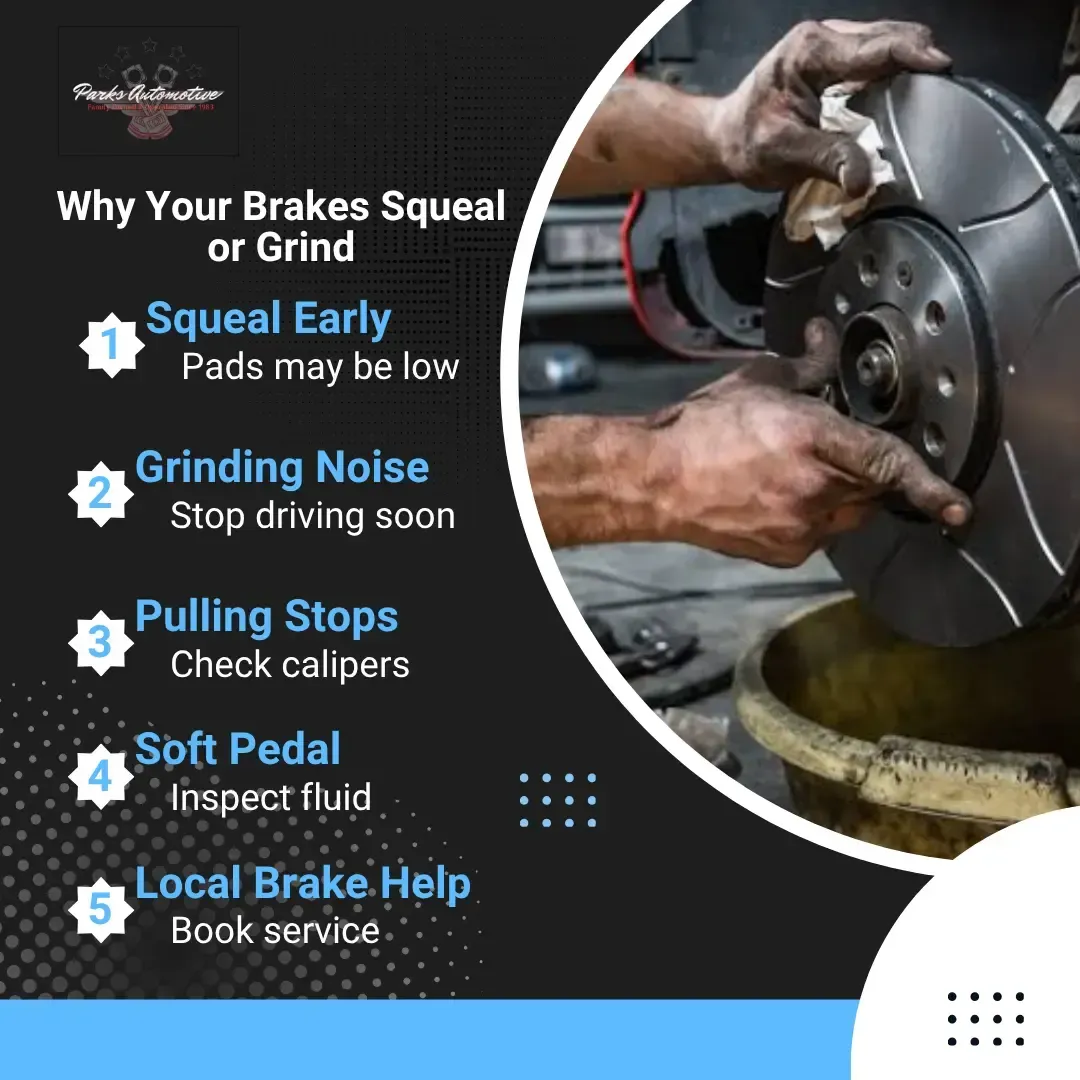
Squealing brakes often start when brake pads are getting thin or hardware is vibrating. Many brake pads have wear indicators that make a high-pitched sound to warn you before the pads are fully worn out.
Do not ignore a squeal that happens every day. Cape Girardeau traffic, short trips, and frequent stops can make worn pads worse fast.
Grinding when braking
Grinding brakes are more urgent. That sound may indicate that the brake pad material is gone and metal parts are rubbing together.
If you hear grinding, avoid extra driving when possible. Continuing to drive can damage rotors, reduce stopping power, and raise the cost of repair.
Brake noise that changes with speed
A noise that gets faster as your wheels turn may point to a rotor, pad, caliper, or wheel-related issue. It may be louder during turns, after rain, or after the car has been sitting.
Mississippi River humidity and wet roads can sometimes cause light surface rust on rotors, but a sound that stays after a few stops should be checked.
What Different Brake Sounds Usually Mean
Brake noise is not always the same problem. The pitch, timing, and feel of the stop all help narrow down what is happening.
High-pitched squeaks
A quick squeak can come from dust, moisture, pad material, or worn brake hardware. If it only happens once after a rainy night, it may not be serious.
A squeak that repeats at every stop is different. That is when scheduling a brake inspection in Cape Girardeau becomes the smart move for local drivers.
Deep grinding or scraping
A deep scrape is usually not a sound to “wait and see.” It can point to metal contact, damaged pads, rotor wear, or a caliper issue.
This type of noise can affect how fast your car stops. It is especially concerning if you drive I-55, carry family passengers, or rely on your vehicle for daily work routes.
Clicking, clunking, or vibration
Clicking or clunking can happen when brake hardware is loose, pads are shifting, or suspension parts are worn. A vibration through the steering wheel may point to rotor unevenness.
If the car also feels unstable, it may be worth looking at related systems through steering and suspension service.
Other Warning Signs That Should Not Wait
Noise is only one clue. Brakes can show trouble through pedal feel, vehicle movement, warning lights, or changes in stopping distance.
Pulling to one side
If your vehicle pulls left or right while braking, one side may be doing more work than the other. A sticking caliper, uneven pad wear, or brake fluid problem can all cause this.
Pulling is more than annoying. It can make emergency stops harder to control.
Soft or sinking brake pedal
A soft pedal can signal air in the brake lines, old brake fluid, a leak, or hydraulic trouble. If the pedal sinks toward the floor, do not keep driving like anything is wrong.
Brake fluid problems affect the system that helps your car stop. They deserve quick attention.
Steering wheel shake during braking
A shaking steering wheel often shows up at highway speeds or during downhill braking. It can point to rotor issues, uneven pad deposits, or other front-end concerns.
Drivers who make regular trips between Cape Girardeau neighborhoods, school drop-offs, and work routes may notice this more during repeated stops.
What Happens During a Professional Brake Check
A good inspection should not be a guess. The goal is to identify what is worn, what is still usable, and what needs repair for safe stopping.
Pad, rotor, and caliper inspection
A technician checks pad thickness, rotor condition, caliper movement, brake hardware, and visible leaks. The inspection also looks for uneven wear patterns that may explain the sound.
Parks Automotive does not recommend repairs based on noise alone. We look for the cause, then explain the next step.
Brake fluid and hydraulic checks
Brake fluid helps transfer pedal pressure into stopping power. If the fluid is low, contaminated, or leaking, the system may not respond as it should.
A full automotive diagnostics approach can help when brake concerns come with warning lights, strange pedal feel, or other drivability symptoms.
Honest repair recommendations
Not every brake noise means you need a full brake job. Sometimes the answer is pads and hardware. Other times, rotors, calipers, or fluid service may be needed.
A dependable brake repair in Cape Girardeau should result in clear findings, practical options, and no pressure to approve work before you understand it.
Takeaways
Brake noise is not something to tune out. Squealing may be an early warning, while grinding can signal damage that needs fast attention. The sooner you schedule a check, the better your chances of protecting your rotors, calipers, and stopping power.
A careful inspection gives you a clear answer instead of guesswork. If your daily drive around Cape Girardeau feels different, sounds different, or takes longer to stop, let Parks Automotive take a look.
Frequently Asked Questions
Can I drive with squealing brakes?
You may be able to drive briefly with squealing brakes, but you should not ignore the sound. If the squeal happens at nearly every stop or gets louder, schedule an inspection before the pads wear further.
Are grinding brakes dangerous?
Yes, grinding brakes can be dangerous because they may reduce stopping power and damage brake parts. If you hear grinding, limit driving and have the vehicle checked as soon as possible.
How often should brakes be inspected?
Brake inspections are smart during regular maintenance, tire service, or any time you hear noise. City driving, hills, frequent stops, and towing can wear brakes faster than easy highway driving.
Why does my car shake when I brake?
Shaking during braking can come from rotor issues, uneven pad contact, worn suspension parts, or wheel-related concerns. A technician needs to inspect the vehicle to confirm the cause.
Can brake noise go away on its own?
Some light noise from moisture or dust may fade after a few stops. Noise that keeps coming back, gets louder, or turns into grinding should be inspected instead of ignored.
Get Trusted Brake Noise Help from Parks Automotive
If your brakes squeal, grind, shake, pull, or feel soft, Parks Automotive can help you discover why. Our family-owned shop has served local drivers for decades, and we focus on clear communication and practical recommendations.
For brake repair in Cape Girardeau, call or text (573) 335-2599 or visit us at 17 S Park Street, Cape Girardeau, MO 63703. You can also schedule service online and let our team check the brake noise before it turns into a bigger repair.
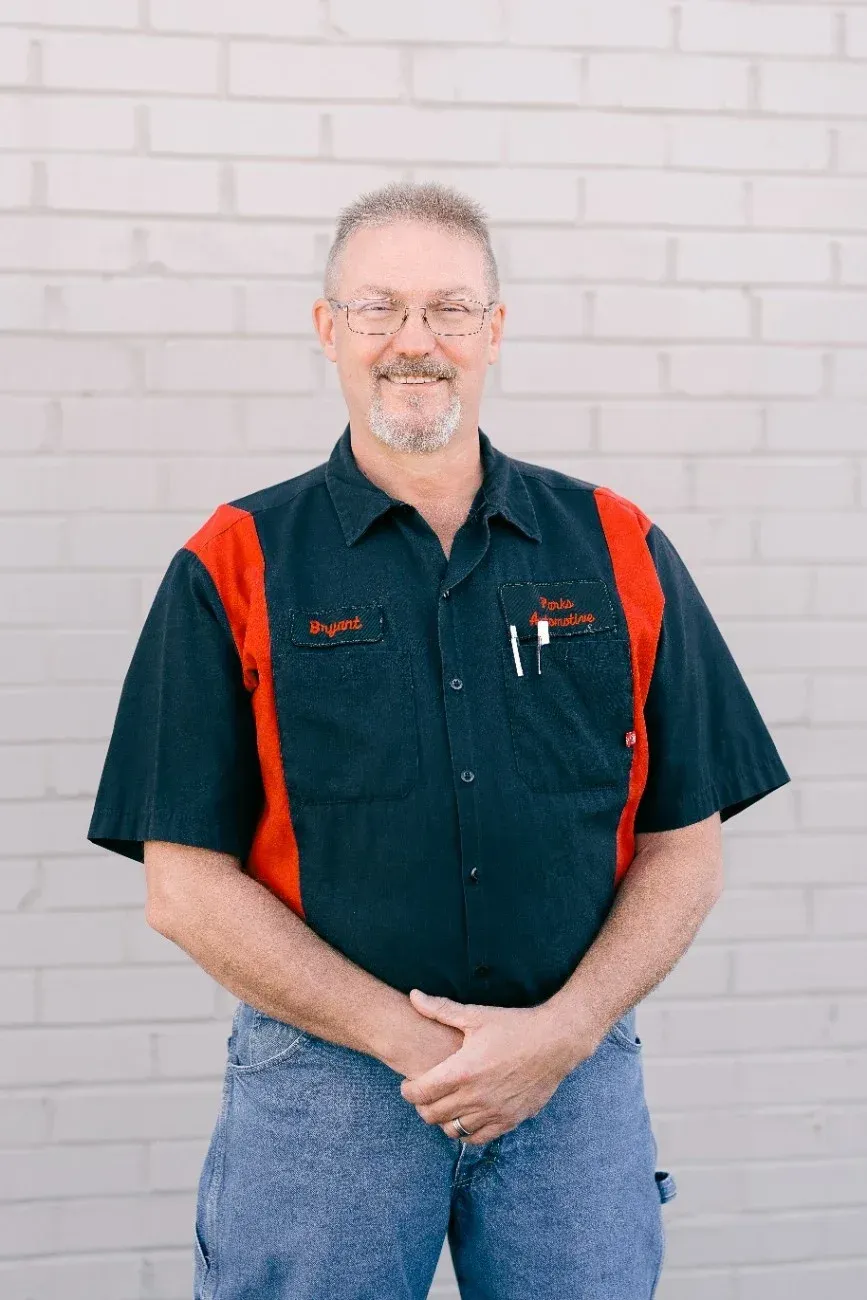
Bryant Parks
Bryant Parks is the owner of Parks Automotive LLC, a family-owned auto repair shop in Cape Girardeau, Missouri. He has worked full-time in the automotive trade since he was 16 and received his training at Nashville Auto Diesel College. In 2012, he took ownership of the shop his father, Joe Parks, founded in 1983.
Bryant and his daughter, Jessica Parks, lead a team that handles brake repair, engine diagnostics and repair, and suspension and steering repair. The shop services domestic, Asian, and European vehicles, including Ford, Chevrolet, Toyota, and Honda.
He traces drivability and electrical faults using a Snap-on Triton lab scope and a TOPDON Phoenix Max. These tools allow him to test sensors and circuits directly before recommending any part replacement.
More than four decades after his father opened the shop, Bryant continues to run it with the same approach. He explains what each vehicle needs in plain terms and treats every customer like family.
